
Crop
Mandi prices and key benchmarks for crop value
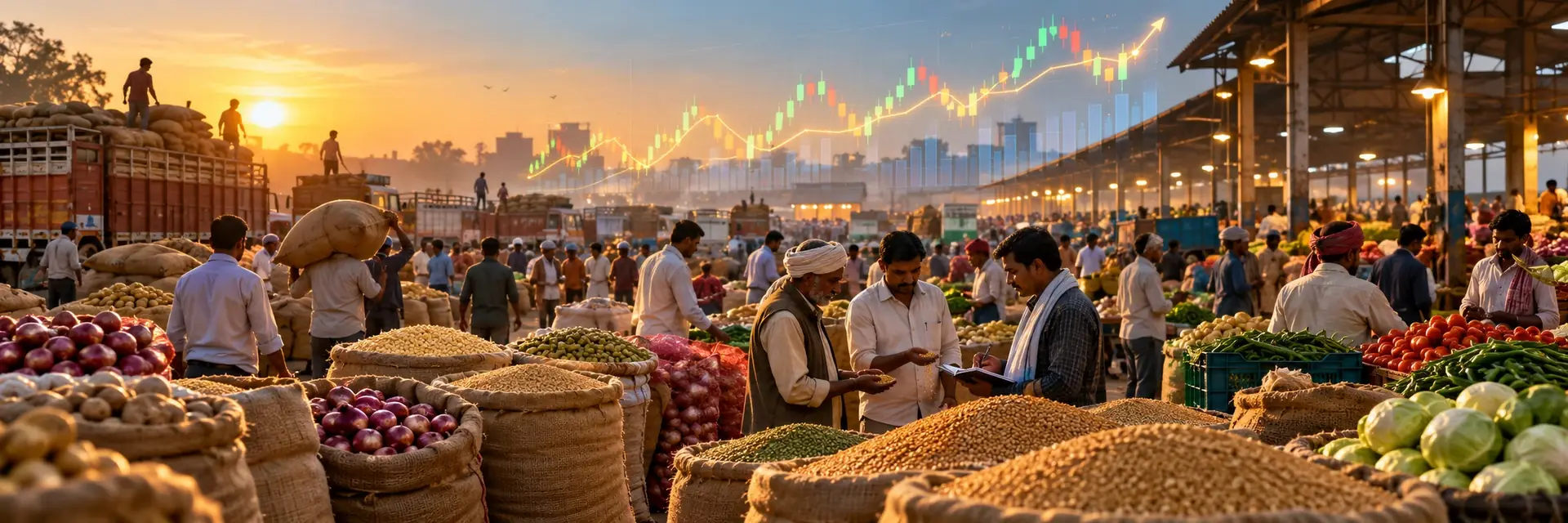 PricesWhat your crop, your animals and your inputs are worth today.Open Prices
Prices
Track agricultural prices across India.
Get real-time and historical market prices, forecasts and key price benchmarks to make better decisions.
Smarter price insights for a stronger tomorrow.Mandi prices and key benchmarks for crop value
Live rates for livestock and poultry
Key input and commodity prices for farming
Anticipate trends, plan better
Career
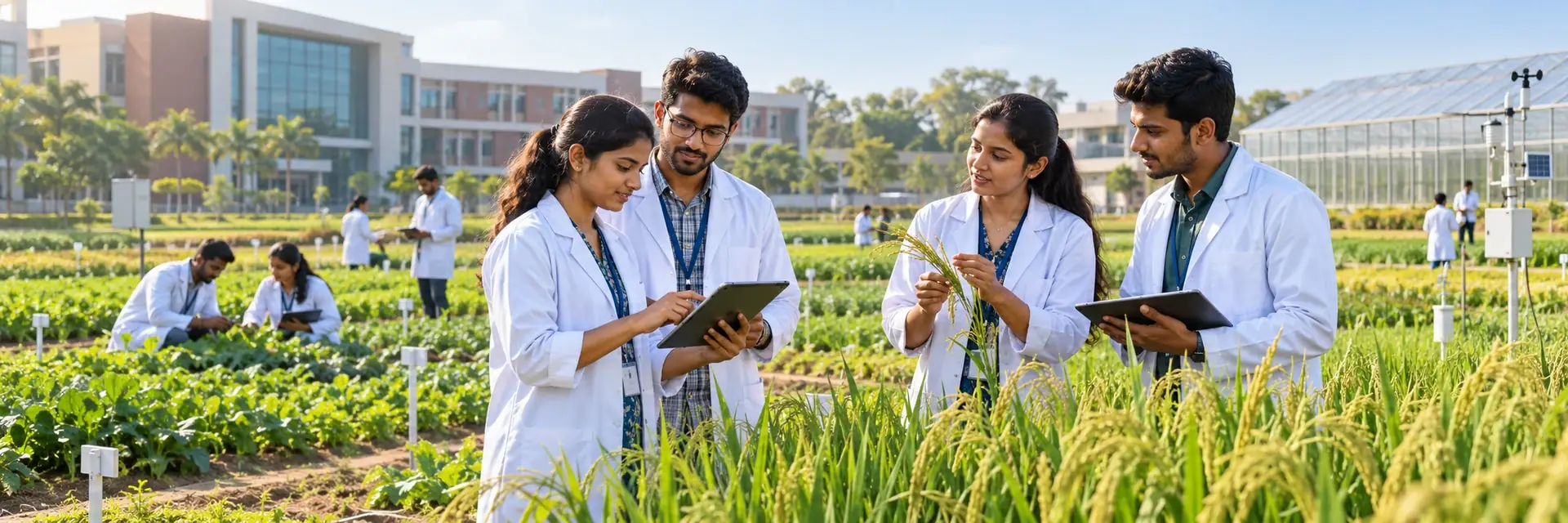
Build a career in agriculture.
Find the jobs that are open now, the exams worth sitting, the courses that lead somewhere, and the reading behind all of it.
A clearer path into agricultural work.Paid work, internships and volunteer roles
Dates, syllabus and study material
Courses you can join and what they teach
Farm finance
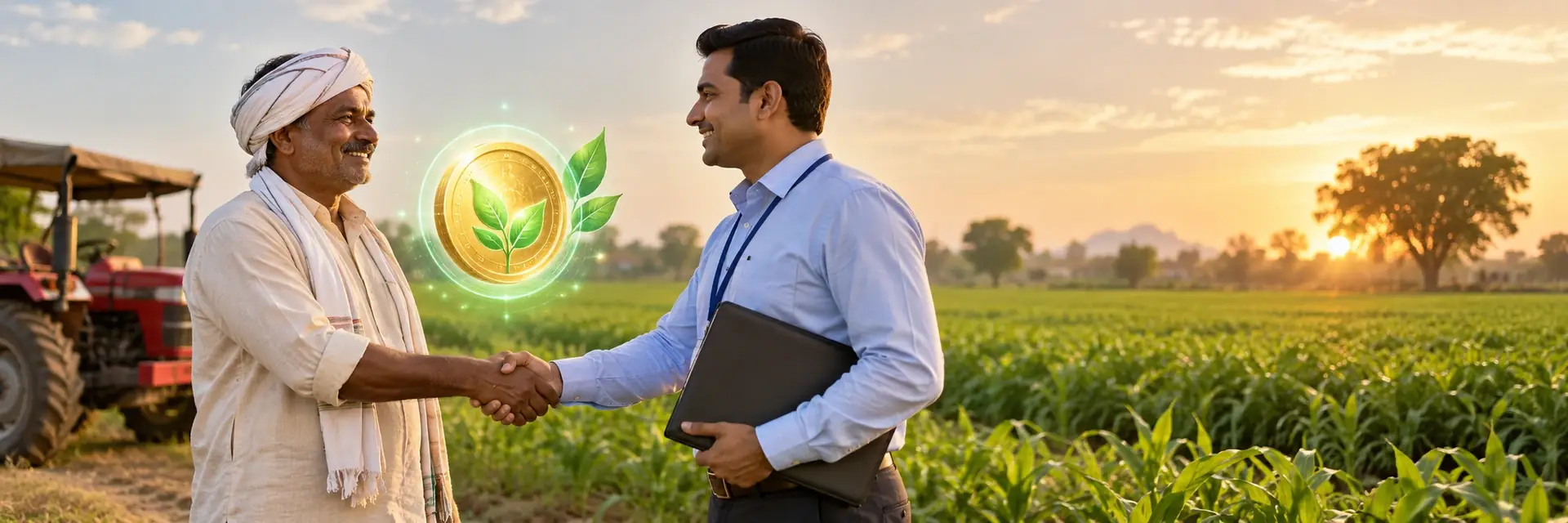
Find the money behind the season.
Check which government schemes you qualify for, what you can borrow and at what instalment, and the cover available for your crop and your animals.
Know what you can claim before you spend.Government schemes and your eligibility
What you can borrow and what it costs
Cover for your crop and your animals
Money for agriculture students

Help
Get help with AgriFolk.
Learn how each part of the site works, see exactly where every number comes from, and reach a person when something looks wrong.
A real person reads every report.Who runs AgriFolk and how to reach us
Help using the site and where the data comes from
What we store and the terms you are using
GI tag directory
Farm produce whose name is protected because of where it grows. Find it on the map, then learn how to use the tag.
All of India
Darker states hold more tags. Pick one on the map or below.
Search the list
The register held 822 entries on 2 May 2026, of which roughly 229 are food and agriculture. This page lists 58 of them.
- Ajara Ghansal RiceCereals2016
- Allahabad Surkha GuavaFruits2016
- Alleppey Green CardamomSpices2008
- Alphonso Mango
Covers Ratnagiri, Sindhudurg, Raigad, Thane and Palghar.
Fruits2018 - Araku Valley Arabica Coffee
Grown by tribal farmers in the Eastern Ghats.
Tea and coffee2019 - Assam Orthodox TeaTea and coffee2007
- Attappady Thuvara
Red gram grown by tribal farmers in the Attappady hills.
Pulses2022 - Banaganapalle MangoFruits2017
- Basmati Rice
Registered across 7 states in the Indo-Gangetic plain.
Cereals2016 - Bhagalpuri Zardalu MangoFruits2018
- Bhalia Wheat
Grown on residual moisture with no irrigation at all.
Cereals2011 - Bikaneri BhujiaProcessed2010
- Byadgi Chilli
Prized for deep colour rather than heat. Widely used for oleoresin.
Spices2011 - Coorg Arabica CoffeeTea and coffee2019
- Coorg Green Cardamom
Grown in the Kodagu hills.
Spices2006 - Coorg OrangeFruits2006
- Darjeeling Tea
India's first registered GI, and still the best known abroad.
Tea and coffee2004 - Dindigul Lock
Not a farm product, included because it is often confused with the agricultural list.
Processed2019 - Erode Manjal
Turmeric from the Erode belt, India's largest turmeric market.
Spices2019 - Gobindobhog RiceCereals2017
- Guntur Sannam Chilli
Feeds India's largest chilli market at Guntur.
Spices2019 - Jalgaon BananaFruits2016
- Jeeraphool RiceCereals2019
- Kachai LemonFruits2015
- Kaipad Rice
Organic by necessity, grown in tidal saline fields.
Cereals2013 - Kalanamak Rice
Black husked aromatic rice from the Terai.
Cereals2013 - Kangra TeaTea and coffee2005
- Kashmir Saffron
Grown on the Pampore karewas. Among the costliest spices in the world.
Spices2020 - Khasi MandarinFruits2015
- Lakadong Turmeric
Unusually high curcumin, which is why it fetches a premium.
Spices2024 - Madurai Malli
Jasmine with a scent tied to Madurai's soil and climate.
Flowers2013 - Mahabaleshwar StrawberryFruits2010
- Malabar Pepper
The pepper that shaped the spice trade.
Spices2008 - Malihabadi Dussehri MangoFruits2009
- Manipur Black Rice
Chak-hao, valued for its anthocyanin content.
Cereals2020 - Marathwada Kesar MangoFruits2016
- Mizo ChilliSpices2016
- Monsooned Malabar Arabica Coffee
Beans exposed to monsoon winds, which changes the cup entirely.
Tea and coffee2008 - Mysore Betel LeafVegetables2005
- Naga Mircha
Among the hottest chillies in the world.
Spices2008 - Nagpur Orange
Vidarbha's mandarin.
Fruits2014 - Nagri Dubraj RiceCereals2024
- Nanjanagud BananaFruits2005
- Nashik Grapes
India's main table and wine grape belt.
Fruits2010 - Navara Rice
A medicinal rice used in Ayurveda.
Cereals2007 - Nilgiri Orthodox TeaTea and coffee2008
- Palani PanchamirthamProcessed2019
- Pokkali Rice
Grown in saline coastal fields, rotated with prawn farming.
Cereals2007 - Sangli TurmericSpices2024
- Shahi LitchiFruits2018
- Sikkim Large CardamomSpices2015
- Tezpur LitchiFruits2015
- Tirupati Laddu
One of the few prepared foods with a GI.
Processed2009 - Tulaipanji RiceCereals2017
- Vazhakulam PineappleFruits2009
- Virupakshi Hill Banana
Grown on the Palani hills.
Fruits2009 - Wayanad Jeerakasala RiceCereals2010
- Wayanad Robusta CoffeeTea and coffee2019
Showing 58 of 58 listed here.
What a GI actually gets you
Before you market your crop with a tag.
- A GI protects the name, not the farmer automatically. To use it you must register as an authorised user with the GI Registry, which is a separate and inexpensive step.
- You must farm inside the registered geographical area to qualify. The registration document defines exactly which districts or blocks count.
- The premium usually flows through a producer society, an FPO or an exporter. A single farmer holding the right to use a label still needs a buyer who pays for it.
- This list is a selection of agricultural entries, not the whole register. Check the official GI Registry list for the current position.
How to register: GI registration guide · What the tag earns: GI premium rates